

When we chose our first four texts, the Declaration of Independence, Emma Lazarus's "The New Colossus," "America the Beautiful," and Frederick Douglass's "What to the Slave is the Fourth of July?", we were asking: how do we tell America's story? Those texts help us surface and celebrate the ideals at the heart of the American project. They are clarifying. They are, in many ways, hopeful.
However, America is essentially built on an incomplete aspiration. The founders unified around an assertion of universal human dignity, but we have been falling short on making that assertion real in the world ever since. As people of faith, we especially know that humans are subject to error and sin. We take atonement seriously. That is why faith250’s work together has always been based in congregations: because we are oriented toward healing
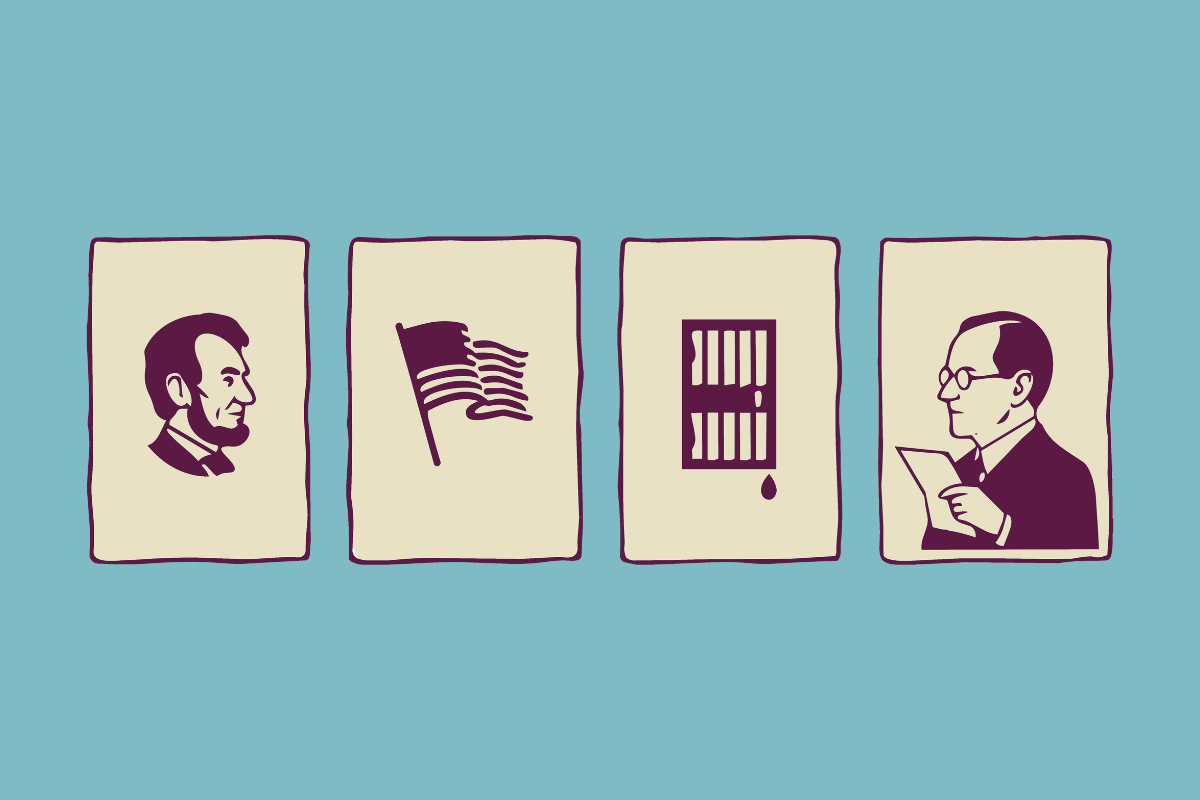
So we offer four texts that go deeper than celebration. Lincoln’s Gettysburg Address, delivered in the shadow of catastrophic division, dares to articulate a we and calls every American into the unfinished work of equality to which soldiers gave their lives. Langston Hughes’s “Let America Be America Again” names the economic struggles carried by Black Americans, immigrants, Indigenous people, and the poor, while refusing to abandon the promise this country has not yet kept. Ruth Muskrat’s 1923 speech to President Coolidge addresses directly the harm done to Indigenous populations and in its very tone, models a path forward. And Ursula LeGuin’s “The Ones Who Walk Away from Omelas” asks the question that cuts across every faith tradition: can a society flourish when it refuses to see those exploited or left behind?
Frederick Douglass opened a door with his searing question, “What to the Slave is the Fourth of July?” These four texts walk across that threshold, each one confronting the distance between our ideals and our reality, and each pointing toward a more honest and hopeful path. In my tradition we call that first movement toward repair teshuvah, a turning. It begins with seeing clearly. That is what we are doing together.
We have made these texts available at faith250.org, with resources designed for both clergy study and multifaith congregational gatherings. If your community has been looking for a way into this work, these are rich and powerful places to begin. I hope you will join us in the conversation.